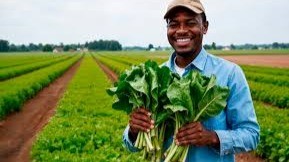
Why Farming Counts as Real Estate Investment
Real Estate investment or development can loosely be described as the process of turning raw land or old property into something of more financial value. It could be through improving, constructing, or repurposing land or buildings for residential, commercial, industrial, or mixed-use purposes. In that regard, let’s switch gears and focus on farming as a real estate venture, yes!
Farming is absolutely a form of real estate investment, and understanding this through the lens of “how and why “ can help you see major opportunities — especially in many African countries like Kenya, where land remains one of the most valuable and a major factor of production.
Let’s break it down clearly:
🏡 1. Why Farming Counts as Real Estate Investment
a. The Core Asset Is Land
By its primary definition, Real Estate, means owning land or property that produces income or appreciates in value. In farming, you own agricultural land, and you earn returns from what the land produces — crops, livestock, timber, etc. This therefore means that the land is your real estate; the crops or livestock are your income streams.
b. It Generates Consistent Cash Flow
Just like rental properties bring in monthly rent, farmland produces regular income through various means which could include but not limited to Sale of crops or livestock, Leasing land to other farmers ,Partnering with agribusinesses or cooperatives. This resultant income makes it an income-producing real estate asset.
c. The Land Appreciates Over Time
Several factors can often lead to a spike in value for farmlands .Some of these factors are:
- Urbanization spreads.
- Infrastructure (roads, water, electricity) reaches rural areas.
- Demand for food and bio-products rises.
d. It Can Be Developed or Repurposed
Farming land can later be converted to:
- Residential or industrial plots,
- Agritourism businesses (farm stays, eco-resorts),
- Solar farms or green energy projects.
So it gives you flexibility and development potential — another hallmark characteristic of real estate investment.
🌱 2. How to Make Money from Farming as a Real Estate Investment
Here’s how farming behaves like (and often outperforms) traditional real estate:

💻 3. How Modern Technology Has Turned Farming into Smart Real Estate
Farming today isn’t just manual labor — it’s becoming tech-driven and investor-friendly making it attractive to even the younger generation
a. Precision Agriculture
Drones, sensors, and satellite imagery help monitor crops and optimize yields which in turn boosts land productivity — increasing your ROI per acre.
b. Smart Irrigation & IoT
Automated systems reduce costs, maximize water use during irrigation, and protect against drought. With better tech there is a higher chance of more consistent returns.
c. AgriTech Investment Platforms
In Kenya and beyond, platforms like HelloTractor connect farmers, machinery, and buyers digitally. You can invest or lease out your land, equipment, or harvest rights through these platforms — earning returns without direct farming.
d. Farm Real Estate Tokenization
Blockchain and fractional ownership models are emerging — allowing investors to buy shares in farmland digitally. This is similar to real estate crowdfunding, but for agricultural assets.
💰 4. Real-World Examples on how to go about it Kenya

⚖️ 5. Pros and Cons (As Compared to Conventioanl Real Estate)
Advantages
- ✅ Lower entry cost (especially rural land)
- ✅ Ongoing income and appreciation
- ✅ Tangible, inflation-resistant asset
- ✅ Potential for value-adding (irrigation, trees, greenhouses)
- ✅ Aligns with food security and sustainability goals
Risks
- ⚠️ Weather dependency
- ⚠️ Price volatility (crop/livestock markets)
- ⚠️ Land disputes or unclear titles
- ⚠️ Requires management or partnership with experts
Tip: You can mitigate risks by leasing to experienced farmers, insuring crops, or diversifying crops/livestock.
We are working round the clock with all stakeholders along the real estate value chain to help investors and managers realize a higher ROI on their real estate portfolio. Engage with me and/or follow Royways Real Estate if you would like us to walk together!